
-
Table of Contents
- Erythropoietin and Sports Performance: Scientific Evidence and Controversies
- The Science Behind Erythropoietin
- EPO and Sports Performance: The Evidence
- The Controversies Surrounding EPO Use in Sports
- The Role of Pharmacokinetics and Pharmacodynamics in EPO Use
- Expert Opinion on EPO Use in Sports
- Conclusion
- References
Erythropoietin and Sports Performance: Scientific Evidence and Controversies
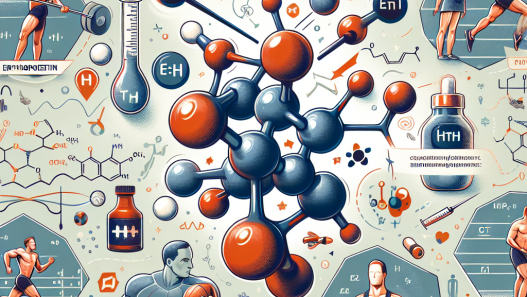
Erythropoietin (EPO) is a hormone naturally produced by the kidneys that stimulates the production of red blood cells. In recent years, it has gained attention in the world of sports as a potential performance-enhancing drug. However, the use of EPO in sports is highly controversial, with many debates surrounding its effectiveness and safety. In this article, we will explore the scientific evidence and controversies surrounding EPO and its impact on sports performance.
The Science Behind Erythropoietin
To understand the potential effects of EPO on sports performance, it is important to first understand its role in the body. EPO is responsible for regulating the production of red blood cells, which are responsible for carrying oxygen to the muscles. In sports, having a higher number of red blood cells can improve endurance and performance, as the muscles receive more oxygen and can work harder for longer periods of time.
EPO is also known to have a direct impact on the body’s oxygen-carrying capacity. It stimulates the production of red blood cells in the bone marrow, leading to an increase in the number of red blood cells in the body. This increase in red blood cells can result in a higher hematocrit level, which is the percentage of red blood cells in the blood. A higher hematocrit level means more oxygen can be transported to the muscles, potentially improving athletic performance.
EPO and Sports Performance: The Evidence
There have been numerous studies examining the effects of EPO on sports performance. One study published in the Journal of Applied Physiology found that cyclists who received EPO injections had a 7% increase in their VO2 max (the maximum amount of oxygen a person can use during exercise) compared to those who received a placebo (Levine et al. 1996). This increase in VO2 max can lead to improved endurance and performance in endurance sports such as cycling and long-distance running.
Another study published in the Journal of Applied Physiology looked at the effects of EPO on sprint performance. The study found that EPO administration resulted in a 3.7% increase in sprint performance in trained male cyclists (Ekblom et al. 1996). This suggests that EPO may also have benefits for athletes participating in high-intensity, short-duration sports such as sprinting and swimming.
While these studies show promising results, it is important to note that the effects of EPO on sports performance may vary depending on the individual and the sport. Some studies have shown no significant improvement in performance with EPO use, while others have reported negative effects such as increased risk of blood clots and cardiovascular events (Lippi et al. 2010). Therefore, more research is needed to fully understand the impact of EPO on sports performance.
The Controversies Surrounding EPO Use in Sports
Despite the potential benefits of EPO on sports performance, its use in sports is highly controversial. One of the main concerns is the potential for abuse and misuse of EPO by athletes. EPO is a banned substance in sports, and its use is strictly prohibited by organizations such as the World Anti-Doping Agency (WADA). Athletes who are caught using EPO can face severe consequences, including disqualification from competitions and loss of medals.
Another concern is the potential health risks associated with EPO use. As mentioned earlier, EPO can increase the risk of blood clots and cardiovascular events, which can be life-threatening. Additionally, the use of EPO can lead to an increase in hematocrit levels beyond the normal range, which can cause thickening of the blood and increase the risk of stroke and heart attack (Lippi et al. 2010).
Furthermore, there is also the issue of fairness in sports. The use of performance-enhancing drugs such as EPO can give athletes an unfair advantage over their competitors, undermining the principles of fair play and sportsmanship.
The Role of Pharmacokinetics and Pharmacodynamics in EPO Use
Pharmacokinetics and pharmacodynamics play a crucial role in understanding the effects of EPO on sports performance. Pharmacokinetics refers to the absorption, distribution, metabolism, and elimination of a drug in the body, while pharmacodynamics refers to the effects of a drug on the body.
In the case of EPO, its pharmacokinetics and pharmacodynamics are closely linked. The pharmacokinetics of EPO can vary depending on the route of administration. When injected, EPO has a rapid onset of action, with peak levels reached within 24 hours. However, when taken orally, EPO has a slower onset of action and may not be as effective in increasing red blood cell production (Lippi et al. 2010).
The pharmacodynamics of EPO are also important to consider. As mentioned earlier, EPO stimulates the production of red blood cells, leading to an increase in hematocrit levels. However, this increase in hematocrit levels can also have negative effects, such as thickening of the blood and increased risk of blood clots. Therefore, it is crucial for athletes to closely monitor their hematocrit levels when using EPO to avoid potential health risks.
Expert Opinion on EPO Use in Sports
Despite the controversies surrounding EPO use in sports, some experts believe that it can have benefits for athletes when used responsibly and under medical supervision. Dr. Michael Joyner, a sports physiologist and an expert on performance-enhancing drugs, believes that EPO can be beneficial for athletes in certain sports, such as cycling and long-distance running, where endurance is crucial (Joyner 2019). However, he also emphasizes the importance of responsible use and close monitoring of hematocrit levels to avoid potential health risks.
Dr. Joyner also believes that the use of EPO in sports is not going away anytime soon and that it is important for sports organizations to have a better understanding of its effects and potential risks. He suggests that more research should be conducted to determine the optimal dosage and administration of EPO for athletes, as well as the potential long-term effects of its use (Joyner 2019).
Conclusion
In conclusion, EPO is a hormone that has gained attention in the world of sports for its potential performance-enhancing effects. While there is scientific evidence to support its benefits, its use in sports is highly controversial due to concerns about abuse, health risks, and fairness. It is important for athletes to understand the pharmacokinetics and pharmacodynamics of EPO and to use it responsibly and under medical supervision. More research is needed to fully understand the impact of EPO on sports performance and to ensure the safety of athletes.
References
Ekblom, B., Berglund, B., & Börgesson, A. (1996). Effect of erythropoietin administration on maximal aerobic power. Journal of Applied Physiology, 81